

The ability to manage inventory is often tested most severely when time is short and the pressure is highest—during an imminent ARC attack or emergency extraction. **High-Stress Inventory Protocol (HSIP)** is the procedural framework designed to facilitate rapid, rational decision-making regarding resource preservation and expenditure under extreme duress. HSIP ensures that Raiders prioritize mission-critical items over bulk salvage, preventing resource loss and securing the primary objective amidst the chaos.
This guide details the sequential steps necessary for rapid inventory optimization when the time for careful deliberation has passed.
The Principle of Value Density
HSIP is founded on the principle of value density. When under attack, a Raider must instantly prioritize items that offer the highest strategic value per inventory slot. This means immediately discarding low-value, high-bulk Tier I materials (Reclaimed Metal Scraps) to make space for rare, small Tier III components (Fusion Cores, Integrated Circuits).

A quick mental value assessment is mandatory before dropping any item:
- **High Priority:** Fusion Cores, Uncorrupted Data, Specialized Ammunition (DM rounds).
- **Medium Priority:** Medkits, Gadget Charges, Refined Alloys.
- **Low Priority:** Basic Ammunition, Reclaimed Metal, Crude Polymers.
Immediate Sort and Convert (Mobile Processing)
The DSR (Designated Salvage Runner) and other equipped Raiders must immediately utilize mobile processing capabilities to convert as many low-value components as possible. Converting basic metal into higher-grade alloys under attack is a difficult but vital HSIP step, maximizing the logistical return before evacuation.
The “Drop and Commit” Decision
When an escape vector is rapidly closing and inventory remains full, HSIP dictates the “Drop and Commit” decision. A Raider must drop the lowest-priority items necessary to regain maximum movement speed (VHS) and combat effectiveness.
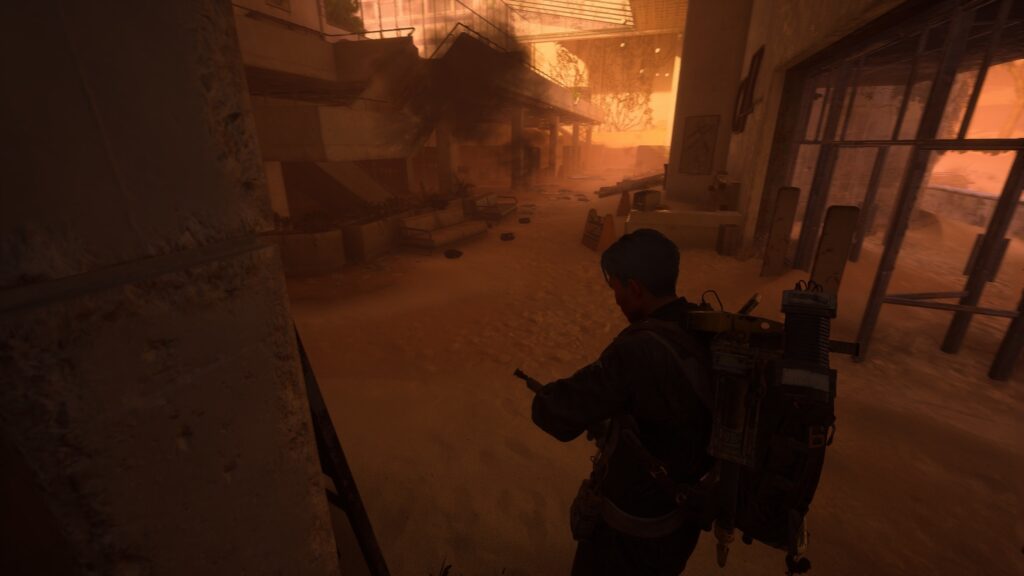
Committing to the sacrifice of bulk salvage is always preferable to being slowed down and losing the entire high-value loadout to ARC fire.
Ammunition Reallocation Protocol (CP)
Under attack, the entire squad’s ammunition status must be communicated (CP). If the Breacher’s automatic weapon is low on Tier I ammo, and the DM has an excess of Tier I materials they cannot carry, the DM must immediately transfer the raw materials to the Breacher, allowing the Breacher to prioritize rapid field-crafting. Inventory management becomes a synchronized team effort.
| Emergency Scenario | Required Inventory Action | HSIP Rationale |
|---|---|---|
| **Team Critically Wounded** | Discard all non-essential salvage; carry max Medkits. | Prioritize human life (DMT) over material gain (LPO). |
| **Extraction Zone Overrun** | Drop low-value salvage at the exfil point; commit to heavy combat loadout. | Regain kinetic superiority to clear the zone for extraction. |
The Psychological Barrier and Training
HSIP failure often stems from the psychological barrier of Gear Fear. Raiders must train rigorously (The Unforgiving Learning Curve) to override the instinct to hoard.

Training simulations must include scenarios that force Raiders to make rapid, irrational-seeming sacrifices (like discarding 50% of the raw salvage) to secure the single most valuable Tier III component.
Conclusion: The Speed of Decision
Inventory management under duress is a measure of Raider discipline. HSIP ensures that when ARC pressure is at its maximum, Raiders respond with rational, systematic resource prioritization rather than panic.
By internalizing the value density of every component, Raiders maximize the return of every perilous supply run, ensuring the continuity of the Resistance.
Leave a Reply